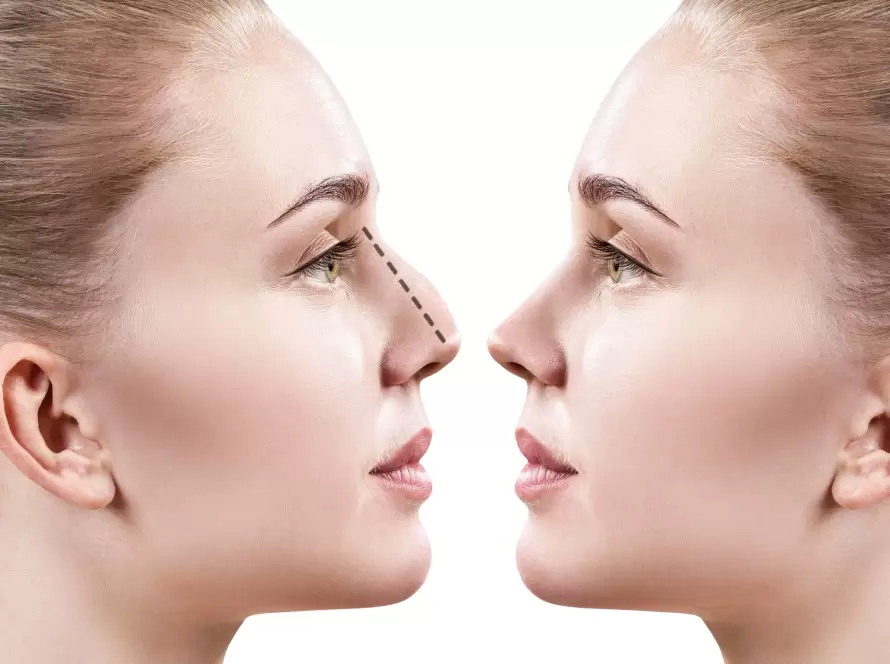
Nasal Reconstruction (rhinoplasty) is a surgical procedure to change the shape and size of the nose. Rhinoplasty can be performed to change the shape of the nose or to make breathing easier. Although the main purpose of rhinoplasty is to improve the shape, size or function of a person’s nose, rhinoplasty can also be performed to correct congenital deformities in the shape of the nose, change the shape of the nasal arch or nose tip, correct the size or shape of the nostrils, and relieve nasal and sinus problems.
History of Rhinoplasty
Rhinoplasty dates back to ancient times. It is known that nose treatment surgeries were first performed in Egypt around 2500 BC. At that time, treatment of nose in terms of surgeries was performed to treat the wounds of soldiers who had lost their noses in wars.
Rhinectomy operations were also performed in ancient India and Rome. In ancient India, nasal reconstructions were performed specifically to make the nose smaller. In Rome, these operations were performed to correct the noses of those who lost their noses in gladiator fights.
Modern rhinoplasty was developed at the beginning of the 20th century. The first rhinoplasties were performed on soldiers with nasal deformities caused by facial trauma. During this period, rhinoplasty was generally performed using the open rhinoplasty technique.
Nowadays, rhinoplasty is often performed for aesthetic reasons. With the development of technology, surgical techniques and methods have been gradually developed and improved. Rhinoplasty is performed using modern technology and surgical techniques to achieve safer and more successful results.
What techniques are used in Rhinoplasty?
Rhinoplasty is performed using either a closed or open technique. The surgeon’s preference may depend on the complexity of the operation, the structure of the patient’s nose and the expected post-operative results. The duration of a rhinoplasty can vary depending on the complexity of the operation, the techniques used in the operation and the experience of the surgeon.
What is Open Rhinoplasty?
Open rhinoplasty involves cutting the cartilage and tissue between the nostrils, opening the inside of the nose and performing the operation. Open rhinoplasty is used in situations that require a more comprehensive approach to changing the shape of the nose.
Open rhinoplasty is the most invasive technique used in rhinoplasty. For this reason, surgeons prefer this technique only in necessary conditions. This technique is more commonly used in cases such as a large curvature of the nasal hump, a large deformation at the nasal tip, or a serious disorder in the cartilage and bone structure.
Open rhinoplasty begins with an incision between the nostrils. Through this incision, the cartilage and bone of the nasal structure become visible and the surgeon can manipulate these tissues to change the shape of the nose. This technique provides more room for the surgeon to operate. One of the advantages of open rhinoplasty surgery is that the surgeon can see the structure of the nose better and work more meticulously. However, because this technique is more invasive, the recovery time may be longer and there may be more edema or bruising.
As open rhinoplasty is a surgical procedure, there are many risks and complications associated with it. These include infection, bleeding, anesthetic reactions, and postoperative nasal deformity. Therefore, this technique should only be used in necessary conditions and by an experienced surgeon.
What is Closed Rhinoplasty?
The closed rhinoplasty technique improves the structure and shape of the nose through incisions made through the nostrils. The closed rhinoplasty technique is preferred for minor changes to the nose or when a less invasive approach is required. In closed rhinoplasty, a small incision is made inside the nostrils. This incision provides access to the cartilage and bone underneath the nasal structure. Because the closed rhinoplasty technique is less invasive, it results in less oedema and bruising and a shorter recovery time.
Closed rhinoplasty surgery allows surgeons to perform less invasive nasal changes to the nose. This technique is also used to correct subtle deformities such as the tip of the nose, a small protrusion in the nasal bridge, or a curve in the nose. Compared with open rhinoplasty, closed rhinoplasty leaves less visible scarring because the incisions are made inside the nostrils. One of the advantages of closed rhinoplasty is that it is less invasive. As a result, recovery time is shorter and there is less oedema or bruising. Closed rhinoplasty is usually less painful and allows patients to return to normal activities more quickly.
One of the disadvantages of closed rhinoplasty surgery is that the surgeon has less access to the nasal structure. Therefore, the surgeon need to work in a limited area. Closed rhinoplasty may not be the right technique for more complex cases of nasal deformity or a serious disorder of the nasal structure.. Because closed rhinoplasty is a surgical procedure like open rhinoplasty, it can carry in many risks and complications. These include infection, bleeding, anesthetic reactions, and postoperative nasal deformity. Therefore, closed rhinoplasty surgery should be performed by an experienced surgeon.
Duration of Rhinoplasty and Anaesthesia
A general or local anaesthesia may be used for rhinoplasty. The type of anaesthesia may vary depending on the complexity of the procedure, the patient’s general health and the surgeon’s preference. In general, the duration of the operation can vary between 1-4 hours. As the length of surgery increases, the length of anaesthesia and post-operative recovery may also increase.
Is Nasal Reconstruction suitable for everyone?
Nasal reconstruction is not suitable for everyone. Candidates for nasal reconstruction should have a certain age, general health, nasal structure and expectations before surgery. In particular, rhinoplasty should not be performed in the following cases
Individuals who have not completed their development (usually under the age of 16)
Patients with chronic medical conditions or who are at risk of infection during the postoperative recovery period.
Pregnant or breastfeeding women
People with psychological problems
In addition, it is important that the patient’s expectations are in line with realistic results before rhinoplasty. For this reason, the surgeon should have a detailed discussion with the patient before the operation in order to understand expectations and offer realistic results.
Who can have Rhinoplasty?
Rhinoplasty can be performed on healthy people who meet certain criteria, which are as follows
The general health of the person undergoing rhinoplasty should be good.
The structure of the person’s nose should be suitable for surgery.
The nasal structure of the person undergoing rhinoplasty should have defects or deformities caused by trauma.
The person should not be smoking before the surgery.
It is the person’s responsibility to follow all procedures recommended by the surgeon before and after surgery.
The person should carefully follow the healing process after rhinoplasty.
However, rhinoplasty is not a suitable option for everyone. For this reason, it is recommended that the patient discuss their health situation and expectations with your doctor before surgery.